The Actual Reason Some Street Style Photos Look Effortlessly Cool and Others Look Try-Hard
Two people can wear genuinely comparable outfits and end up with street style photos that read completely differently — one effortlessly cool, one visibly try-hard — and the actual difference frequently comes down less to the outfit itself and more to the specific moment within a shot being captured, since a held, static pose reads very differently from a photo caught mid-motion or mid-thought.

Why the Captured Moment Genuinely Matters as Much as the Outfit
A photo taken during a held, deliberately arranged static pose genuinely signals to a viewer that the subject was aware of and performing for the camera at that exact instant, while a photo caught during actual movement or a natural, unguarded moment genuinely signals the opposite, and that signaled awareness-versus-naturalness reads as try-hard versus effortless regardless of how similar the actual outfits are.

The Concrete Timing Principle That Separates the Two Outcomes
Photos caught during a transitional moment — mid-stride while walking, glancing away rather than directly at the lens, adjusting a bag or coat — genuinely read as considerably more natural and effortless than photos caught during a held, front-facing static pose, because transitional moments are harder to consciously perform and therefore read as more genuine even when they’re actually anticipated and set up in advance.
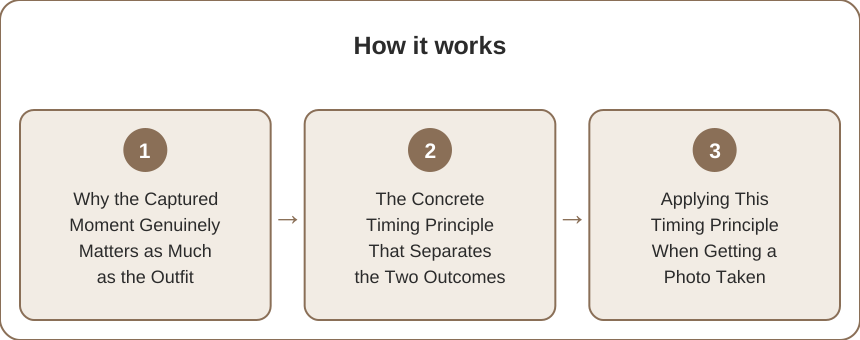
Applying This Timing Principle When Getting a Photo Taken
Rather than stopping and holding a fixed pose for the photo, keep walking naturally or stay mid-motion through the actual moment the photo gets taken, and let the photographer catch a transitional instant rather than waiting for a held pose — this timing adjustment alone genuinely changes how effortless the resulting photo reads, independent of the outfit itself.
The specific moment a street style photo captures genuinely matters as much as the outfit itself, since a held, static pose signals conscious awareness of the camera and reads as try-hard, while a photo caught during a transitional moment — mid-stride, glancing away, adjusting a bag — reads as considerably more natural and effortless even when it’s actually anticipated in advance, so staying in motion rather than stopping to hold a pose is a concrete timing adjustment that changes how a photo reads independent of the outfit.
Keep Reading
This article is for general styling and informational purposes only. Trends, sizing, availability and pricing may vary by brand and season.